On this page
- Why the exact identifier matters
- Step 1: Capture the product information safely
- Step 2: Search the current CPSC recall database
- Step 3: Distinguish recall, safety warning, and certification notice
- Step 4: Verify the certification record
- Step 5: Check the manufacturer and seller
- Step 6: Match compatibility separately
- Marketplace red flags
- If you find a match
- If you do not find a match
- Frequently asked questions
- Products & Gear method
- Sources
A product name is not enough to rule a recall in or out. Verify the exact brand, model, date code, serial range, manufacturing location, and other identifiers listed in the official notice.
Start with the U.S. Consumer Product Safety Commission recall database. Then confirm certification information and manufacturer documentation. If the product is installed, energized, damaged, or subject to a stop-use instruction, follow the official remedy and use a qualified professional where the work requires it.
Why the exact identifier matters
A recall may cover:
- one model but not a visually similar model;
- products made during a date range;
- one factory or country of manufacture;
- a serial-number range;
- a particular rating or configuration;
- products sold through named retailers; or
- units with a specific label, component, or packaging error.
Do not decide from color, enclosure shape, or seller photos alone.
Step 1: Capture the product information safely
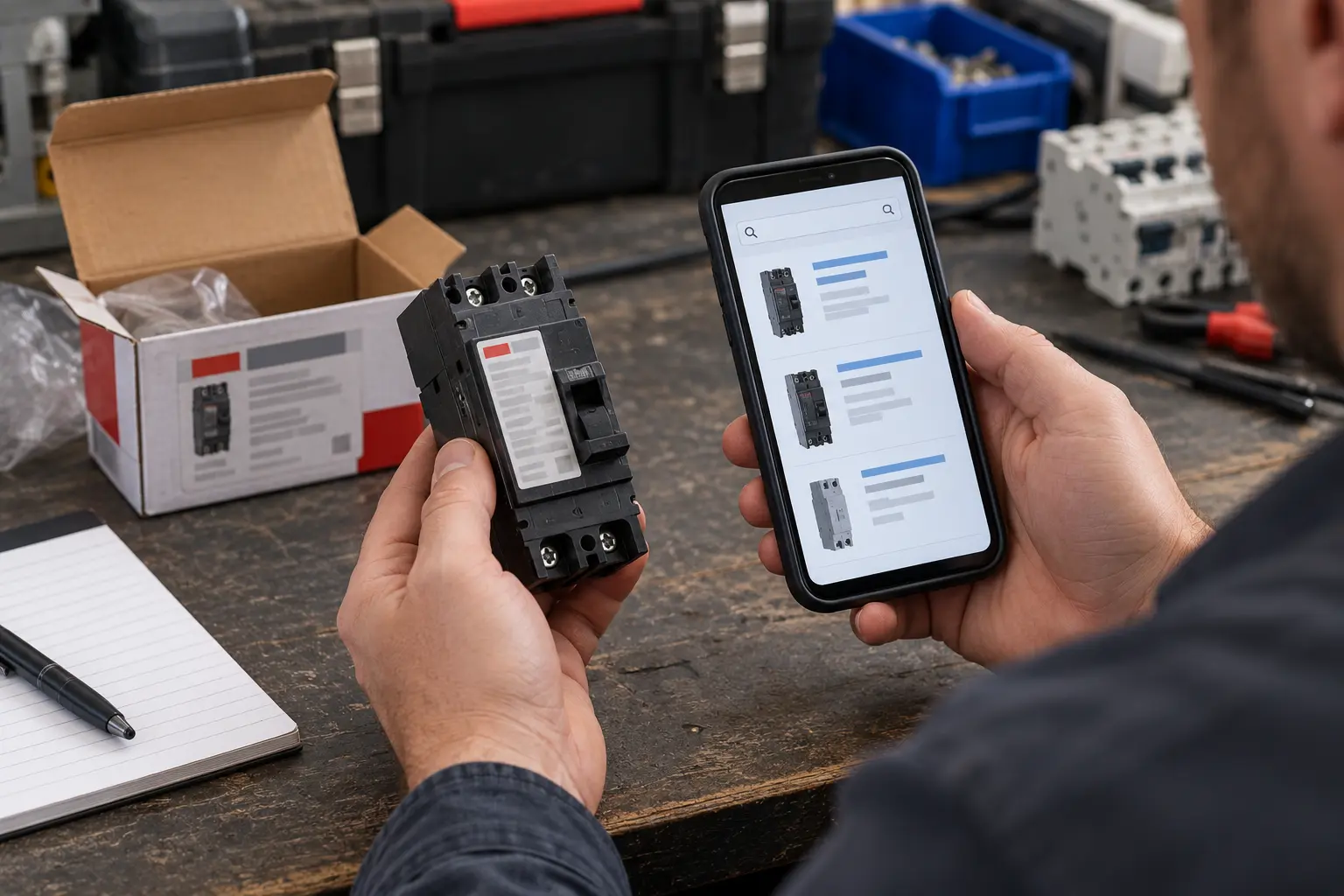
Before searching, record:
- brand;
- full model number;
- catalog or part number;
- serial number;
- date code;
- electrical ratings;
- certification mark and file or control number, if present;
- manufacturer;
- where and when it was purchased; and
- clear photographs of the label and packaging.
Do not remove covers, expose energized parts, or disturb installed equipment just to read an internal label. If the identifier is not safely accessible, stop and ask a qualified person.
Step 2: Search the current CPSC recall database
Use the official CPSC recall page. Search multiple ways:
- brand;
- manufacturer;
- product name;
- model number; and
- known retailer.
Open the individual recall notice and compare every listed identifier. Read the hazard and remedy sections exactly.
CPSC states that its recall data updates weekly as recalls are announced and that remedy information can change daily. Recheck the live notice rather than relying on a saved screenshot or old news story.
Step 3: Distinguish recall, safety warning, and certification notice
Different official notices answer different questions.
- A CPSC recall identifies affected consumer products, the hazard, and the remedy.
- A CPSC safety warning may warn about a product even when a conventional recall is not the format.
- A manufacturer notice may address service, replacement, or compatibility.
- A UL Solutions public notice may identify unauthorized or counterfeit marks, products not evaluated by UL Solutions, or another certification concern.
- A certification database helps verify that a certification record exists for the exact product and category.
One source does not replace the others.
Step 4: Verify the certification record
OSHA’s Nationally Recognized Testing Laboratory program recognizes organizations to certify specified products for workplace electrical-safety requirements. OSHA also states that recognition of an NRTL is not an endorsement of the equipment.
For a UL mark, UL Product iQ is the official source for UL certification information. Compare the manufacturer, product category, model, and certification details. A logo printed on a label is not proof by itself that the exact product has a valid record.
Other NRTLs maintain their own certification information. Use the lab’s official source and confirm that the mark, product, and certification scope align.
Step 5: Check the manufacturer and seller
Use the manufacturer’s official support, safety, or recall page. Confirm:
- whether the product is affected;
- the current remedy;
- proof-of-purchase requirements;
- shipping or replacement instructions;
- whether the product should be disconnected or stopped from use; and
- whether a distributor or installer must perform the work.
Do not ship batteries, energized equipment, or hazardous components without following the stated handling instructions.
Step 6: Match compatibility separately
A product can be authentic and not recalled yet still be wrong for an installation.
For circuit breakers and similar gear, verify the exact equipment instructions, labeling, and manufacturer-approved compatibility. Physical fit is not proof of suitability. A recall search is not a substitute for a compatibility or code review.
Marketplace red flags
Pause before buying when:
- the seller cannot show the complete label;
- model or date codes are obscured;
- packaging and product identifiers conflict;
- the price is implausibly low;
- the seller describes a certification mark without a searchable record;
- the product is used, reconditioned, or removed from unknown equipment without documentation;
- the listing uses generic photos; or
- the return and recall process is unclear.
These signs do not prove a product is counterfeit or recalled. They justify verification before purchase.
If you find a match
- Follow the official notice’s stop-use or other safety instruction.
- Confirm the exact remedy on the current notice.
- Contact the party identified by the notice.
- Preserve labels, receipts, and correspondence.
- Do not improvise a repair unless the official remedy authorizes it.
- Use a qualified professional for installed electrical equipment or work that requires safe isolation, permits, or inspection.
- Report an unsafe consumer product through the official CPSC path when appropriate.
If you do not find a match
“No search result” does not prove a product is safe, authentic, compatible, or suitable.
Check spelling and alternate brand or manufacturer names, search the model and date code, review certification records and manufacturer notices, and recheck if new information appears.
Frequently asked questions
Is a certification mark the same as a recall check?
No. Certification and recall systems answer different questions. Verify both when relevant.
Does a CPSC search result cover commercial equipment?
CPSC covers consumer products within its jurisdiction. Workplace, industrial, and commercial equipment may involve other regulators, certification bodies, and manufacturer notices.
Can I keep using a product while waiting for the remedy?
Follow the official notice. Some notices direct consumers to stop use immediately; others provide different instructions.
Does a breaker that fits physically belong in the panel?
Not necessarily. Use the panel labeling, manufacturer documentation, and applicable code or authority requirements.
Products & Gear method
This guide is based on specification and documentation review plus comparative research. ClearTrade Report did not conduct hands-on product testing for this article, and this foundation guide contains no affiliate links.
Sources
- CPSC: Recalls and Product Safety Warnings — accessed October 4, 2026.
- CPSC: Search — accessed October 4, 2026.
- CPSC: SaferProducts.gov reporting reference — accessed October 4, 2026.
- OSHA: Nationally Recognized Testing Laboratory Program — accessed October 4, 2026.
- OSHA: Current List of NRTLs — accessed October 4, 2026.
- UL Solutions: Product iQ certification database — accessed October 4, 2026.
- UL Solutions: Public Notices — accessed October 4, 2026.
Need a qualified professional?
Trusted Pros uses visible license-verification states and never ranks paid listings above unpaid listings.