On this page
- Point sensors, flow monitoring and automatic shutoff are different
- How to choose the first locations
- Water heater
- Washing machine
- Under sinks and vanities
- Toilets
- Dishwasher
- Refrigerator, ice maker and water filter
- Sump pump and basement equipment
- HVAC and condensate areas
- What point sensors can miss
- Commissioning and maintenance
- Build a response plan
- Frequently asked questions
- Sources
Put point leak sensors where water is most likely to reach the sensor early and where a delay would cause the most damage.
That usually means starting near water heaters, washing machines, under-sink plumbing, toilets, dishwashers, refrigerators with water lines, sump equipment and mechanical rooms. But a sensor only detects water that reaches its sensing contacts. A device in the wrong corner can stay dry while water moves under a cabinet, through a wall or into the floor below.
The best placement plan considers the likely source, the path water will take, the consequence of a delayed alert and whether someone can respond.
Point sensors, flow monitoring and automatic shutoff are different
A point sensor detects water at a specific location. A flow-monitoring device watches water use or pressure patterns in the plumbing system. An automatic shutoff system can close a valve after detecting a defined condition.
These categories overlap in some products, but they are not interchangeable. The EPA WaterSense guide explains that available technologies differ in detection method, installation and maintenance. An alert does not stop water unless a compatible shutoff action is part of the system and works as intended.
How to choose the first locations
Prioritize a location when it has a pressurized supply connection, a tank or pump, infrequent observation, vulnerable finishes, a path to a lower level, prior leakage or a realistic chance of fast response.
Water heater
Place a sensor at the lowest practical point where water from the tank, drain, relief piping or nearby connections would collect. If the heater sits in a drain pan, follow the sensor manufacturer’s instructions and do not block the drain. A sensor near a pan does not prove the pan can contain every leak.
Washing machine
Place the sensor where leakage from supply hoses, valves or the drain connection is likely to reach it. A point sensor may miss a wall-side leak if water travels into the wall or under the appliance without reaching the contacts.
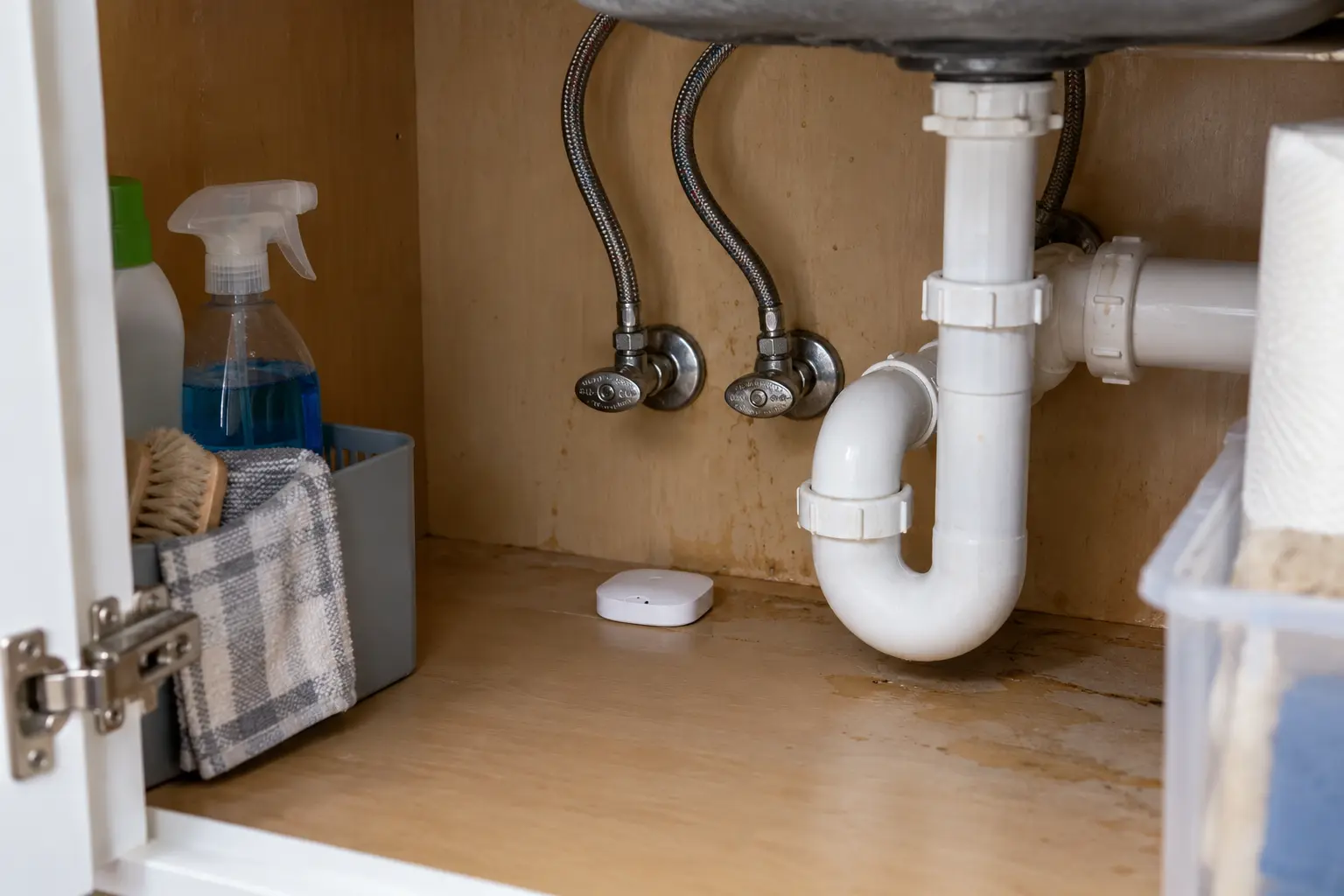
Under sinks and vanities
Place the sensor on the cabinet floor near supply stops, flexible connectors, the trap and any filter-related plumbing. Keep stored items from pushing it aside or absorbing water before it reaches the sensor.
Toilets
A sensor can sit near the supply stop, connector and base while staying out of normal cleaning water. It will not necessarily detect an internal toilet leak that sends water silently into the bowl; meter checks or dye testing address that different failure mode.
Dishwasher
Place a sensor near the front edge or adjacent accessible area where a leak is likely to emerge, subject to appliance and sensor instructions. Do not interfere with leveling, airflow, service access or electrical components.
Refrigerator, ice maker and water filter
Focus on supply connections, filters and tubing. A sensor beneath or behind the refrigerator may help if it remains within connectivity range and can be inspected. Check after service because moving the appliance can disturb tubing.
Sump pump and basement equipment
A sensor near the sump pit, pump, check valve or discharge route can warn of overflow or nearby leakage. Place it outside normal moisture and where it cannot fall into the pit. A sensor is not a backup pump or power source.
HVAC and condensate areas
Place sensors near drain pans, pumps or accessible low points as allowed by current equipment instructions. Persistent moisture, blocked drains or repeated alarms need qualified service rather than a relocated sensor.
What point sensors can miss
- water that runs away from the device;
- a leak inside a wall or ceiling;
- a small leak absorbed by materials;
- an internal fixture leak with no water on the floor;
- a leak during a dead battery, power loss or connectivity outage;
- a device that was moved, covered or never commissioned; or
- an event outside the sensor’s environmental limits.
Commissioning and maintenance
- Test the sensor using the manufacturer’s method.
- Confirm the local alarm and remote notification.
- Label the location in the app or account.
- Record battery or power requirements.
- Verify operation after router, phone or account changes.
- Schedule periodic inspection and testing.
EPA’s 2026 WaterSense guide emphasizes selection and maintenance, not just purchase. A sensor that is offline or misplaced cannot provide the intended warning.
Build a response plan
Record the main water shutoff location, who can access it, emergency contacts, fixture valves, shared or fire-sprinkler boundaries and when to call a plumber, property manager, restoration company or insurer. Do not close an unfamiliar valve on a shared or fire-protection system.
Frequently asked questions
How many leak sensors does a house need?
There is no universal number. Count the high-priority sources and separate water paths, then consider consequence and response time.
Should a sensor go inside a water-heater drain pan?
Only if the current sensor and water-heater instructions allow it and the device will not obstruct drainage or service.
Will a point sensor detect a pipe leak inside a wall?
Not unless water reaches the sensor. Flow monitoring or investigation may be needed.
Do leak sensors prevent water damage?
They can provide earlier warning and some systems can initiate shutoff, but no device prevents every loss.
Sources
Accessed October 4, 2026.
Need a qualified professional?
Trusted Pros uses visible license-verification states and never ranks paid listings above unpaid listings.