On this page
The 2026 National Electrical Code changes both requirements and where readers find them. For contractors, inspectors and owners comparing proposals, an old article number can now point to the wrong place.
A useful first step is to separate three questions: what changed in the edition, which edition governs the project, and how the applicable text affects the proposed work. This overview addresses the first two. It is not a substitute for the adopted code or a project-specific design calculation.
Four changes worth locating
In his January 29, 2026 NFPA-hosted overview, senior electrical specialist Dean Austin identifies these changes:
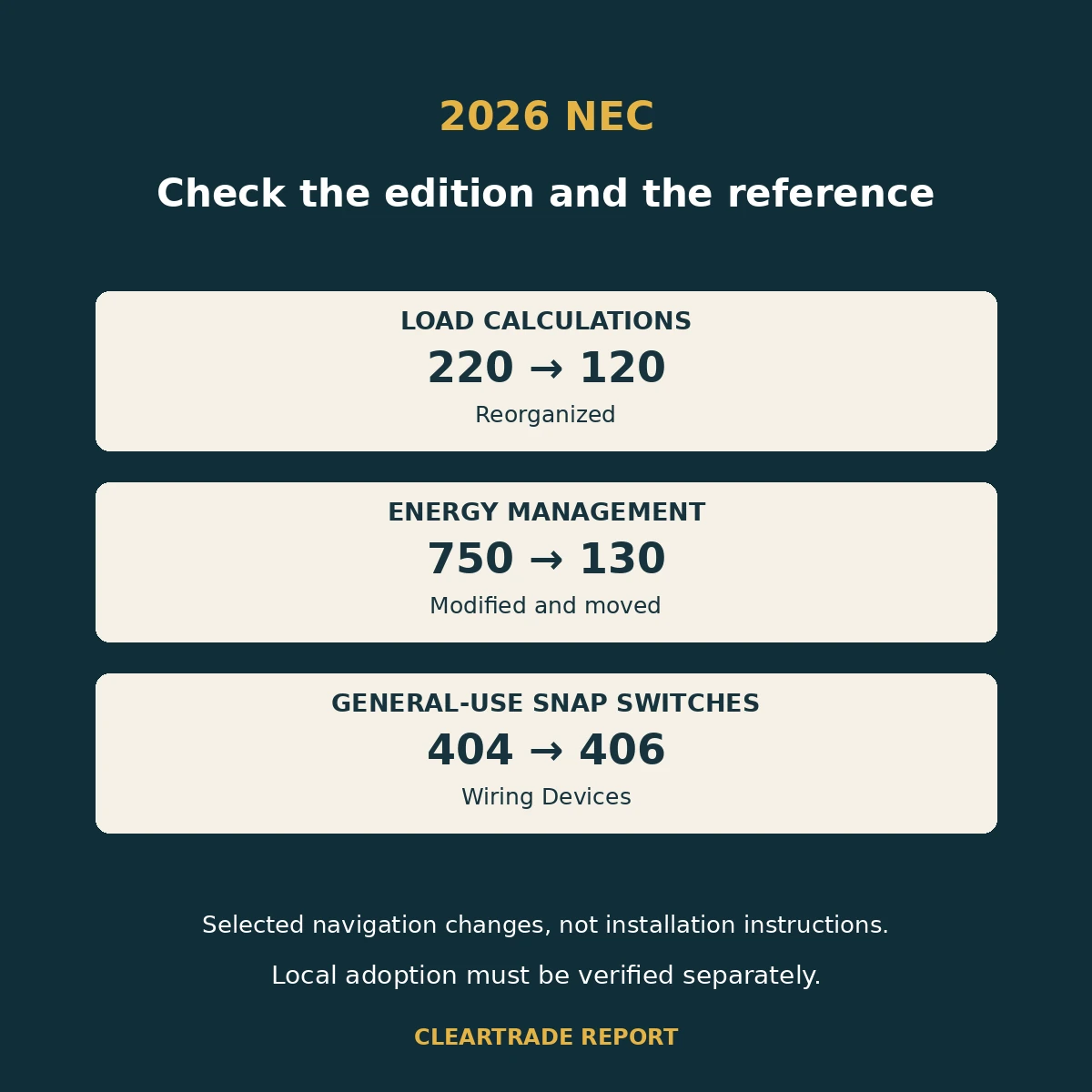
- Load-calculation material formerly in Article 220 was reorganized into Article 120.
- Energy-management-system material formerly in Article 750 was modified and moved to Article 130.
- General-use snap-switch material moved from Article 404 into Article 406, renamed Wiring Devices.
- New Article 624 addresses power systems for electric self-propelled vehicles not designed for on-road use, including equipment such as electric forklifts and golf carts.
These are navigation examples, not a complete change list. Moving a subject does not establish that every provision stayed the same. Austin also describes substantive load-calculation changes; this article does not reproduce the factors or turn that summary into sizing instructions.
Watch the old Article 750 reference
The same number can represent a different subject across editions. Austin’s overview identifies a new Article 750 concerning grounding and bonding for limited-energy systems, while the former energy-management material moves to Article 130.
For a specification, training slide or proposal, write the edition alongside the article reference. A bare “Article 750” citation is now particularly easy to misunderstand. Check both the heading and the applicable text before carrying an older reference forward.
The overview also separates changes in the 2026 edition from broader modernization planned for 2029. A future structural plan is not an adopted requirement for a current job.
Publication is not local adoption
NFPA’s enforcement-map page, dated August 3, 2026, documents use of different NEC editions across jurisdictions. It identifies the 2026 edition’s issuance and NFPA effective dates, but those are not one nationwide date on which every project must follow it.
For an actual job, obtain the current adoption information from the authority having jurisdiction. Establish the adopted edition, local amendments and which permit or transition provisions apply to that project. A national overview or an older map cannot settle those questions.
Existing installations, additions and alterations can also raise different applicability questions. Do not infer a universal retrofit obligation merely because a newer edition exists.
Put the edition in the project record
Use a short code-basis note with the proposal or design package:
- Jurisdiction: identify the agency responsible for the permit and inspection.
- Edition and amendments: record the governing edition and the official adoption source.
- Project applicability: document any confirmed transition provision affecting this permit.
- Changed references: identify old citations that need to be checked against the new organization.
- Design implications: ask the responsible designer to document the applicable calculation or requirement.
For example, a proposal that cites an older load-calculation article should prompt a request for the edition and calculation basis. It does not, by itself, prove the proposal is wrong. Conversely, citing the newest article number does not prove that a calculation or installation complies.
Related reading: data-center electrical planning boundaries.
Frequently asked questions
Does every jurisdiction use the 2026 NEC?
No. Verify the edition and amendments adopted by the authority responsible for the project. NFPA’s dated enforcement map shows that jurisdictions use different editions.
Did Article 220 simply get a new number?
The NFPA-hosted overview describes both reorganization into Article 120 and substantive changes. Do not assume every requirement is unchanged.
Why should a specification identify the edition?
Article numbers and subject locations can change. Pairing the edition with the citation helps the reviewer locate the intended provision.
Does this overview provide installation or sizing instructions?
No. It identifies selected changes and a verification workflow. Apply the governing code text, amendments and project-specific design documentation.
Sources
Sources inspected October 26, 2026.
- NFPA-hosted overview: What Changed in the 2026 NEC? — Dean Austin, January 29, 2026. This specialist overview carries the author’s opinions disclaimer; it is not a formal NFPA interpretation. Reader comments were not used.
- NFPA: NEC enforcement maps — page dated August 3, 2026. Use current jurisdictional adoption records for a particular project.
Need a qualified professional?
Trusted Pros uses visible license-verification states and never ranks paid listings above unpaid listings.